We are excited to announce that we at Your Online Choices have acquired the Secure Computing website. We loved the work being done by the team behind Secure Computing, and we are thrilled to be contributing to such an excellent cause.
The internet is pretty much impossible to avoid in the 21st century. Whether you’re a lover of social media, you love watching your favorite TV shows back-to-back, or you occasionally (and secretly) google the answer to a quiz question, using the internet is likely to be an integral part of your life.

There is no doubt that the internet is a wonderful tool. However, we know that it can also be a dangerous and scary one. From viruses and malware to cyber warfare and electronic fraud, there is a lot of potential harm that can be done through the internet.
That is why, at Your Online Choices, we aim to raise awareness surrounding safety and privacy online.
To learn more about our work, take a look below.
What Is Your Online Choices?
The internet is an incredibly useful tool. Nowadays, thanks to the internet, we have the whole world at our fingertips, we can easily connect with people across the globe, and knowledge is readily available at just the click of a button.
However, it has recently become clear how naive all of us internet users have been. We have often discarded the risk of privacy and security issues, particularly those that came about as a consequence of social media.
Your Online Choices is dedicated to highlighting such security risks and giving you the tools and understanding to ensure that you are using the internet as safely as possible. Your Online Choices believes that your data and information should always be protected.
Whether you’re trying to understand online safety for the first time, or you’re looking for clear-cut advice regarding VPN services and cyber security, Your Online Choices has got you covered. Take a look at some of the important issues and questions that Your Online Choices address below.
Data Loss
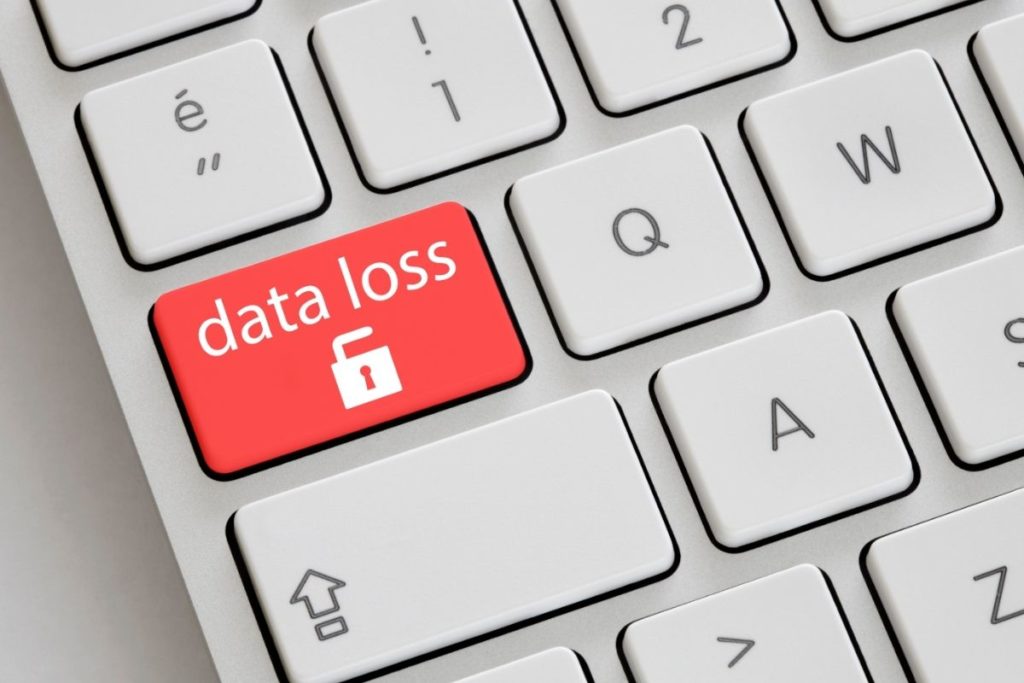
One of the most important things to understand when you’re using a computer and the internet is data loss. Data loss is what happens when information systems get corrupted, deleted, or become irrecoverable.
Data loss can happen as a consequence of a number of different factors. These include hard drive failure, software malfunctioning, and viruses and malware. To prevent data loss, it is necessary to create backup systems and use antivirus and security protectors.
Data loss can have a huge impact on both businesses and individuals. If a company experiences data loss, it can take years for them to recover. If an individual experiences data loss, they may be at risk of not just losing your data, but having it used by criminals.
The term ‘data loss’ is often used interchangeably with ‘data breach’. This is because sometimes criminals corrupt your data as they complete the hacking process. However, not all data breaches result in data loss.
Viruses And Attacks
If you are going to be using the internet, you need to ensure that you are protected from viruses and attacks. Your Online Choices aims to educate on different types of viruses and attacks, and exactly how to prevent them.
For instance, as discussed above, not all data breaches result in data loss. This is because some hacking processes don’t corrupt data. In fact, some hacking processes aren’t even noticeable from the perspective of the victim.
Trojan Viruses
One such data breach can arise as a consequence of a Trojan virus. This is a kind of malware that has been disguised by the attacker. Usually, the victim downloads it onto their computer thinking that it is legitimate software.
Trojan viruses tend to be spread through legitimate-looking files or emails that are spammed to reach as many different victims as possible. Unlike others, this virus cannot install itself automatically. The victim must download the program for the virus to take hold.
There are many different types of trojan viruses. Generally speaking, once downloaded, they tend to spy on the user’s activity or steal their sensitive data. However, Trojan viruses can work in a number of different ways to achieve a number of different goals.
For example, some may not be activated until the victim has accessed a specific website or application, and once they have received the information they required, they may delete themselves. To learn more about the types of Trojan viruses, take a look at our article.
DDoS Attacks
Another type of attack that is useful to be aware of is the DDoS attack. If you have ever found that you’ve been denied access to one of your favorite sites, this may be because that site has become a victim of a DDoS attack.
This type of attack exploits a site’s limited capacity. Attackers might use bots to bombard the site with a flood of requests, which will prevent the site from functioning as normal. When multiple bots work together on a task (such as this one), this is called a botnet.
Botnets are a growing concern for a lot of people. They tend to be controlled by a cybercriminal, or an organized group of cybercriminals, to steal personal information or to seriously damage online businesses. To learn more about them, check out this article.
In the case of DDoS attacks, botnets attack a specific site at the same time by sending fraudulent requests to a particular server or network. This causes the site to become overwhelmed and prevents non-fraudulent users from accessing it.
Unlike Trojan viruses, DDoS attacks don’t tend to be used by criminals to steal data. Instead, they are often used for political or financial reasons. E.g., a company might attack their competitor’s site, or an individual might attack a site that advocates for a specific world-view.
Protective Systems
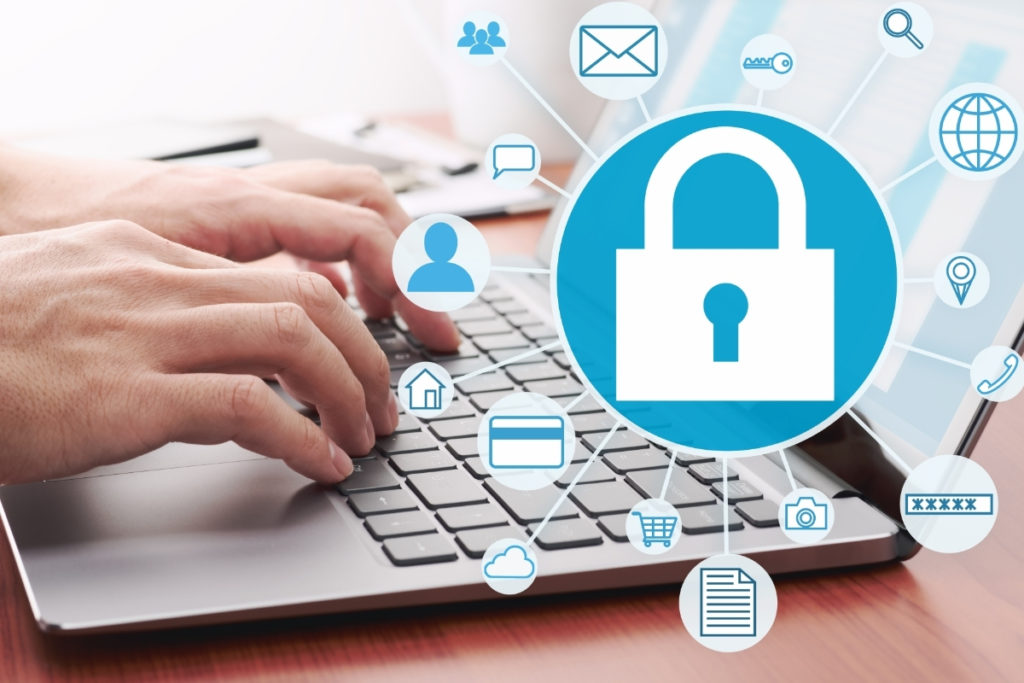
At Your Online Choices, in addition to educating people about the nature of specific viruses and attacks, we also aim to provide the necessary tools and information to prevent people like you from becoming victims of such problems themselves.
Antivirus Software
For instance, even though you’ve almost definitely heard of antivirus software, you may not understand exactly what it is, what it does, and why you should have it. This is where Your Online Choices intends to help.
Antivirus software scans your device for viruses or malware. They can also be used against other types of threats, such as Trojan viruses (as discussed above). This software protects your device by scanning for and identifying such threats.
They can also work to remove threats and prevent additional viruses and malware from taking hold. In fact, antivirus software can also protect you from being the victim of data mining and other things that manipulate your personal data.
As such, antivirus software is an important tool to have on your devices. There are so many potential threats when it comes to accessing the internet, but antivirus software acts as a really great line of defense against any harm.
Antivirus software is key to keeping yourself secure when using the internet. To learn more about how exactly antivirus software works, and the different types of antivirus software, take a look at our article.
Firewalls
People often get antivirus software and firewalls confused, but there is a distinct difference between the two. Antivirus software protects your devices against both external and internal threats, whereas, a firewall can only protect your device from external issues.
However, that isn’t to say that firewalls aren’t useful. A firewall is a piece of software that runs on your computer, and it is generally the first line of defense against external threats such as viruses and malware.
Specifically, firewalls examine all incoming network traffic and block any suspicious or unsafe connections. For instance, if you receive an email, your firewall will examine the contents of the message to decide whether it is harmful or not.
As you can probably imagine, firewalls are indispensable tools that work to keep your device and your data safe from harm. Without a firewall, your network is essentially open access, meaning that anyone can access your data and install viruses.
At Your Online Choices, we do a deep dive into firewalls. We cover everything, from how exactly they work, to the different types of firewalls, and everything in between. You can take a look at it here to learn more.
General Interest
Even though Your Online Choices will be focusing on how to protect yourself and make smarter choices online, we will also cover a wide range of general interest topics related to the internet.
These pieces may focus on terms that you’ve likely heard of but may not understand types of software that could be of use to some of you, or up-to-date information on hot internet-related topics. We hope that such pieces will spark your interest.
VMware
For instance, You Online Choices will aim to answer all of your burning questions regarding software such as VMware. VMware is a company that makes virtualization software that allows organizations to use their computers more efficiently.
Virtual machines (VMs) are software-based representations of real computers. There are a huge number of benefits of using virtual machines. Below, we’ve listed some of the most notable benefits of VMs and VMware.
- VMs provide flexibility in how you manage your computer resources.
- VMs are easy to set up.
- VMware allows users to use additional programs without buying a new device.
- VMware provides flexibility in how you manage your computer resources.
- VMware products improve ROI.
VMware products can do wonders to help improve you or your business. In fact, VMware’s products are already crucial parts of many companies’ IT infrastructure. To learn more about the variety of VMware products, take a look at our in-depth article here.
Wikileaks
Sometimes, internet-related issues make it into the headline news or circulate conversations in social situations. Your Online Choices hopes to address issues such as these so that our readers are more able to understand and engage with current events.
For instance, if you keep up with the news (or have friends that do), you’ve almost definitely heard of Wikileaks. However, despite its newfound exposure, many people still don’t really understand what Wikileaks is – but not to worry, Your Online Choices is here to help.
Wikileaks was founded by Julian Assange. He is a publisher and activist who wanted to create a platform where people could anonymously make public sensitive information regarding the wrongdoing of government officials and corporations.
In 2006, Assange founded Wikileaks. Since then, it has published a number of classified documents. These range from military documents (such as the Chelsea Manning leaks) to sensitive material from political parties (such as the 2016 democratic party leaks).
Wikileaks has played an important role in many different world events. To learn more about Wikileaks, including its most famous publications, the influence it holds, and details about its founder, take a look at our article.
Cyberwar
At Your Online Choices, we believe that being well-informed about current issues is important, particularly when it comes to dangerous or threatening issues. Understanding such topics enables you to engage with them in a more productive way.
For instance, there has been much hysteria surrounding the term Cyberwar. However, even though many people will be familiar with the (quite scary) term, most won’t have an in-depth understanding of what Cyberwar is, how it might manifest, and what the consequences are.
Cyberwar (short for cyber warfare), is an online conflict between nation-states or international organizations. One institution attempts to damage the other via their computational and informational networks.
Cyberwarfare is a reality. In fact, a growing number of experts believe that cyberwarfare is the new form of war. The US has set up a government bureau focused on cyber warfare because it perceives it as a real threat.
It’s difficult to imagine what the consequences of a cyber war might be. It might involve the leaking of the personal data of an organization’s users or even an attack on a nation’s power grid. As you can imagine, the consequences of cyber warfare could be quite terrible.
However, there is a huge amount of hysteria that surrounds cyberwar due to its ambiguity and novelty. As such, at Your Online Choices, we aim to keep you as well-informed as possible, to prevent such uncertainty and hysteria. To learn more, take a look here.
Summary
Now that Your Online Choices has acquired Secure Computing, we hope to help all of you stay protected and safe online. We also hope that all our readers take an interest in cybersecurity, data protection and internet privacy. The more informed we all are, the better.

- IPSec vs. OpenVPN: Which Is Better? - December 10, 2022
- How to Turn Off VPN on Mac: A Step-by-Step Guide - December 10, 2022
- What Is a VPN Concentrator and What Does It Do? - December 10, 2022
Related Posts: